Log in


From the Fall of the Berlin Wall until about a decade ago my animating intellectual question was pretty much, ‘how did a small number of natural sciences become qualitatively more impressive than the social sciences?’ Because I met the late George Smith relatively early in my thinking about this (as an undergraduate), I often formulated this question in terms of evidence; he liked his version of my question as ‘how to turn data into high-quality evidence?’ And his striking answer was (to simplify) that deviations from theoretically significant expectations through theory-mediated measurement were made informative in an iterative process over time in the sciences that succeeded in achieving lift-off. While I was much more interested in the social organization of the sciences than George, I never did much better than he did in answering my own question. But I did make sure his version was published in the best possible form and with full detail (see his ‘Closing the Loop.’)
Along the way, I became an expert on Newton and his reception and on developments in twentieth century economics, and I found a home in professional philosophy (as a ‘historian of philosophy,’ a ‘philosopher of social science,’ and ‘HPS-type’). At least this is a way one can tell my professional story before I switched (or returned) to political theory. Once in political theory I recognized that Machiavelli’s great contribution to the art of government — that in the right conditions, which includes considerable layers of social opacity, social disorder can itself be informative — anticipates George’s insight into how successive approximation can be fruitful.
Be that as it may, the way professional philosophy is organized, there is no list of ‘open’ questions that are treated as ‘important.’ In fact, there are ways of posing my animating question in terms that made it sound vaguely Popperian (viz. ‘is there a scientific method;’ ‘a logic of discovery?;’ ‘could concepts be stress tested?’)—and so discarded. Sometimes I was directed to others — Alison Wylie, Nancy Cartwright, and Hasok Chang back in the day — whose projects had a family resemblance with my own.
There are some subfields in philosophy where through the force of personality and/or institutional entrenchment (or donor/foundation persistence) some questions do feel significant and open. But more often than not these are treated (after the fact) as evidence of ‘fashion’ in philosophy. Because there is no consensus on what really matters philosophically, and great jobs are scarce in the profession, lots of professional philosophers are in the business of artificially producing prestige (by keeping acceptance rates for the really important journals ridiculously low).
The previous was not really meant to be polemical.
Professional philosophers often think of themselves as constituting a field that’s not very far from professional mathematics. One of our core areas — mathematical logic — even has some overlap with foundational practices in mathematics. And I am just old enough to remember the time when some wise folk thought that having mathematical logicians around in philosophy was a thing thought good, perhaps standards-protecting (even standards-raising), for a department. And I was taught by and mentored for a long time by a philosopher, Jody Azzouni who himself studied mathematical practice, and found that useful in debating what other professional philosophers argued about philosophically important topics.
But judging by the reactions collected at ‘Proofs and Prompts’ to the Open AI math dump last week, the way enquiry is organized in professional mathematics is quite distinct from the relative lack of organization in philosophy. Or to put it differently, professional mathematics has much more of a closed guild structure than we do in philosophy. (Some evidence for this can be gleaned from the way the mathematicians use ‘community’ in ‘mathematical/mathematics community’—no philosopher would speak of our profession as such as a community unless it were in order to be satirical.) There who you study with and what ‘open’ problems you work on have a rather tight connection and, these in turn, have a rather tight connection to one’s professional identity and trajectory. To put it in terms of the economists: barriers to entry and, once in, path-dependent endowment effects are rather steep.
Having a list of such open problems, and an implied sense of their significance to the community, allows for much coordination, including the distribution of honors, jobs, and grant proposals. While there is, undoubtedly, a political economy to the institutions that fund all of this, it has allowed for a non-trivial amount of bottom-up intellectual and collective self-governance as well as exploration. It is, for example, pretty clear that quite a few leading mathematicians have been early adopters of LLMs in their own research and, thereby, have indirectly helped train the next generation of these.
The situation described in the previous paragraph is fairly unique in human history. Few civilizations have invested in pure mathematics to the degree ours has with the rise of the modern research university and dedicated research institutions since (say) the late nineteenth century. (By ‘civilization’ I am happy to be very inclusive.) But by making its official problems explicitly legible (to adopt social science jargon), the ‘mathematical community’ became sitting ducks when the barriers to entry were huge for individual researchers but a relatively easy technological hurdle for a few for-profit corporations with no hard budget constraint (relative to the mathematical community). These companies now control a vital resource that enables one to be on the leading edge of the mathematical frontier. My use of ‘one’ is, of course, a weasel word—because it is wholly unclear if any human can have any leading role on that frontier henceforth.
Perhaps the implied guild structure explains the unseemly schadenfreude with which the demise of professional mathematics has been welcomed by so many commentators. Cheering on the misfortune of those who harm nobody, and who are engaged in a noble activity, is itself evidence of the advanced corruption (recall) of our age.
One sometimes hears from economic historians and sociologists of technology that the technological disruption to the mathematical community, if it is one, is no big deal all things considered. The mathematicians turn out to be no different from the hand-weavers, the loom operators, and the human (mostly female) ‘computers’ that got displaced by machines in the context of progress. But while there is more than a kernel of truth in this (and there is quite a bit of intellectual labor embodied in modern machinery, etc.), this is one of the first times since the rise of the modern research university that a ‘pure’ field risks being overtaken and displaced by one of the (applied) technologies it partially birthed. Philosophers are somewhat used to being told by the practitioners in the fields it helped birth that philosophy is useless and pointless; but it may hit the mathematicians harder. Many mathematicians are in a state of “shock,” “loss,” and depression (as well as anger), but a guild that gets undermined also opens up new opportunities for those impatient or sidelined under the old regime.
As regular readers know (recall here), I argue that the structural (Humphreys) opacity that is inherent in LLMs enhances genuine expertise. But it doesn’t follow from this that the remaining place for human mathematical expertise is on the research frontier of commonly defined open questions. My own scholarly work (with Russo and Wagemans here) suggests that in such conditions there will be more work for certification and less for production. For, opaque systems, when used to produce results, systematically secrete new layers of opacity that need to be checked and monitored.
I increasingly suspect professional mathematics will turn into practiced and idiosyncratic virtuosity, where math slides back into modern art.1 (Danny Calegari’s examples of animations are worth pondering.) Since modern universities find ways to hire, evaluate, and promote all kinds of artists, this may require less administrative adjustment than one might fear.
Of course, if the cutting edge LLMs become more like a utility, then, alternatively, maybe credentialling within mathematics disappears entirely. Automated iterative feedback from deviations then mops it all up.
What about professional philosophy and the scholarship about it (i.e. history of philosophy)? Prestige producers and the journals they control are fighting a rearguard action against the use of LLMs. I expect more and more ‘professional philosophy’ to be co-produced by professional philosophers and LLMs, until we reach the point where LLMs ‘edit,’ referee, and summarize all such papers and are effectively the only ones actually reading them. Given the way it is organized the good news is professional philosophy is not so vulnerable to a hostile takeover; but the bad news is that it is vulnerable to increasing (ahh) hollowing out of its mode of production because that mode is not itself intrinsic to philosophy. (Okay that was polemical.)
That last claim is too strong undoubtedly. Such legibility to outsiders is, of course, a matter of degree and intensity, and one wonders if the philosophical contributions of (say) Jorge Luis Borges will be re-evaluated in light of such considerations (not to mention the fortunes of bits of continental philosophy). By emphasizing Borges here I do not mean to focus on his brilliant thought experiments, but rather on how he indicates new ways of discernment. That means, but this is self-serving, that philosophers will increasingly value and gravitate toward judgment and voice—but I would say that.
Let me rephrase that. You may think that if we take Liam Kofi Bright’s famous distinction between basically pleasant bureaucrats and Sexy Murder Poets seriously, I am predicting the demise of the former and the renewed attraction of the latter within professional philosophy. But while that result would greatly amuse me, it’s not what I am predicting. Rather I am claiming (recall my treatment of synthetic philosophy) that philosophy will rediscover that its vocation is in the tending, nurturing, and monitoring of the machinery of governance of the bureaucratic structure (including the LLMs) that is opaque to society.
- An earlier version of this post was published at Digressions&Impressions.
1 In some ways this would be a return to Hardy’s perspective, but also with a different conception of art and beauty underwriting it. That is, mathematics will become more like painting in response to the development of photography and the newer digital technologies. (The second half of this footnote was suggested by a token of Opus 5.5.)


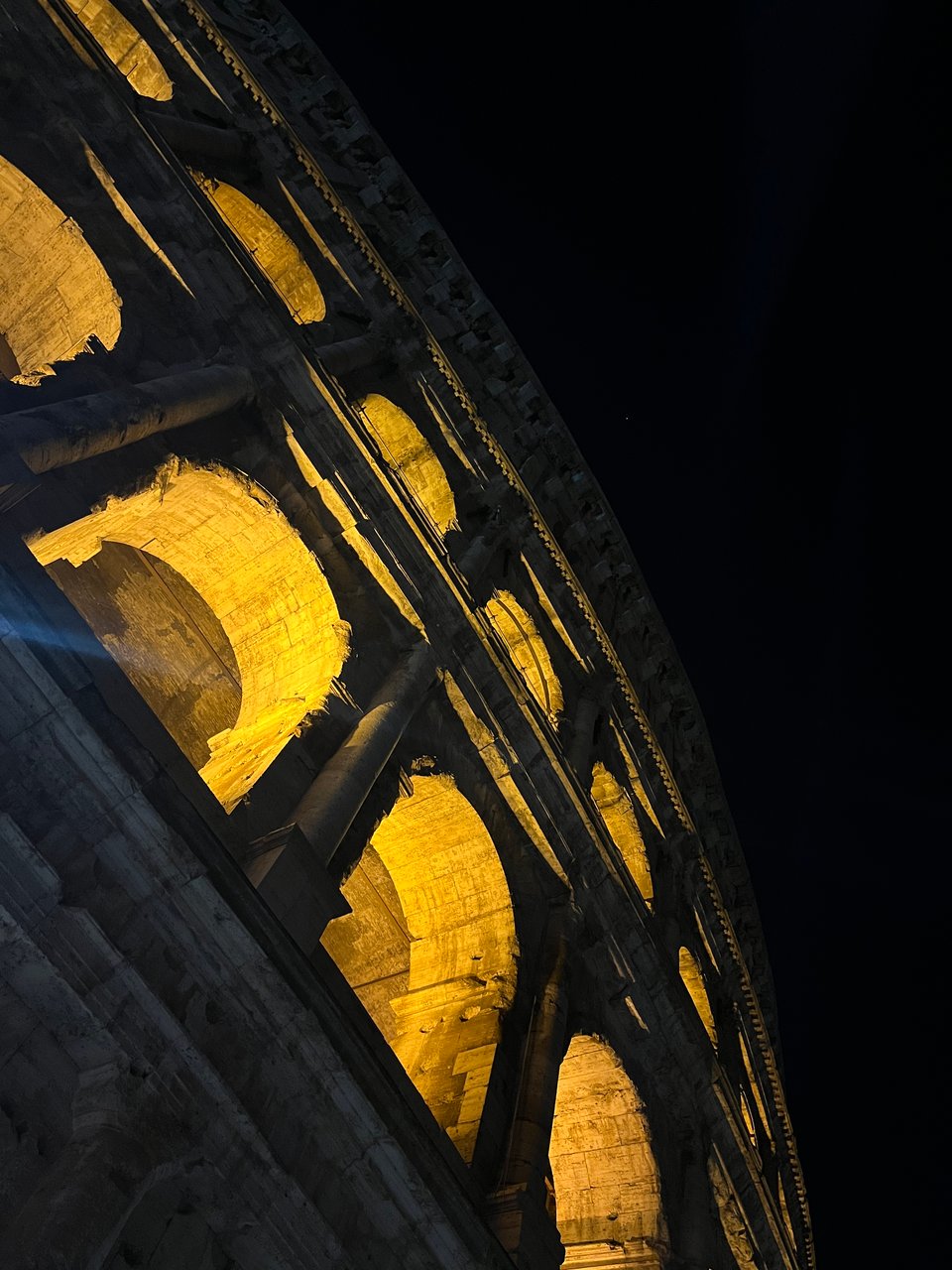



 The Cray-1 replica, complete with iconic padded bench seating. The only thing missing is Robert Redford and Ben Kingsley having a discussion on SECTEC Astronomy. Credit: Museo de Historia de la Computación
Credit:
Museo de Historia de la Computación
The Cray-1 replica, complete with iconic padded bench seating. The only thing missing is Robert Redford and Ben Kingsley having a discussion on SECTEC Astronomy. Credit: Museo de Historia de la Computación
Credit:
Museo de Historia de la Computación
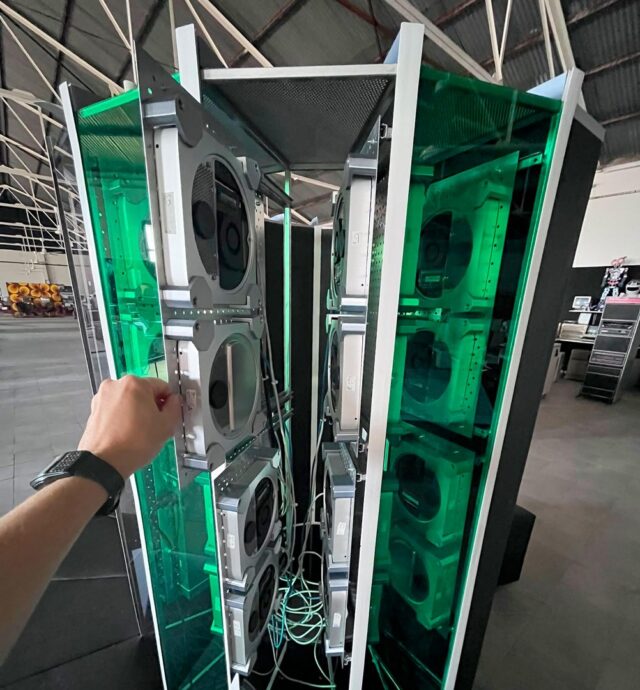 Macs are mounted vertically on aluminum racks in a steel chassis. Credit: Museo de Historia de la Computación
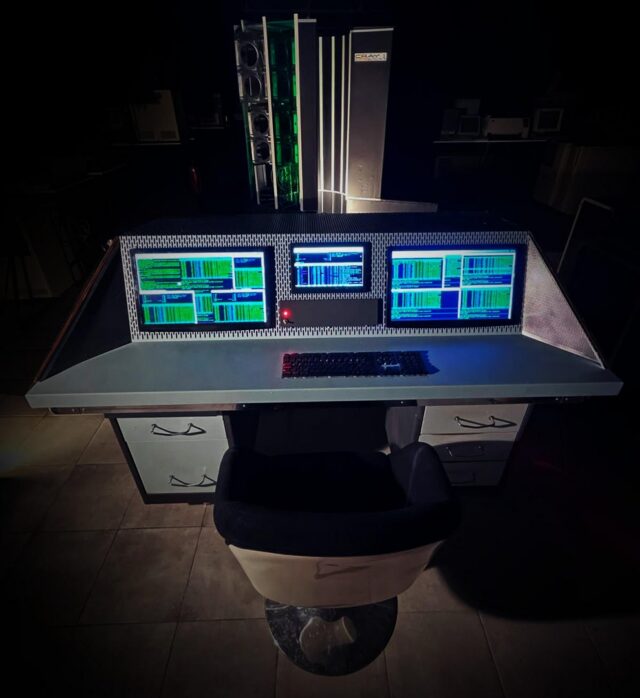 Classic design elements lend the Cray-1 control terminal some retro style. Credit: Museo de Historia de la Computación
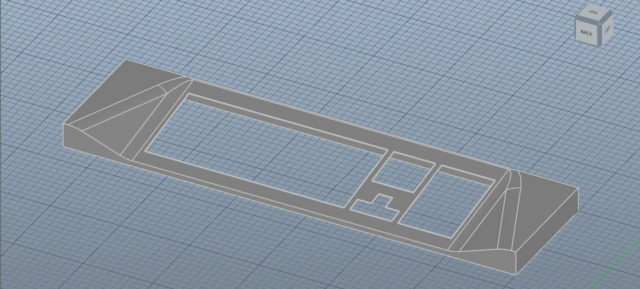 Mockup of the shell that will fit over the existing PowerMac G4 keyboard. Credit: Museo de Historia de la Computación
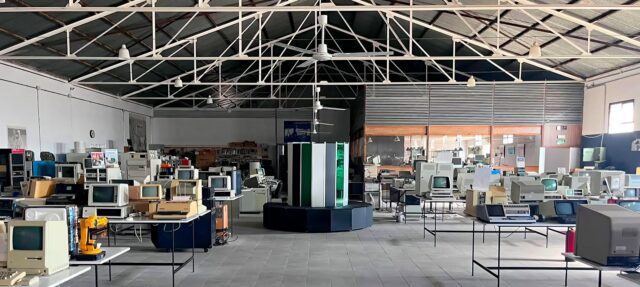 The Cray-1 replica among its classic computing peers. Credit: Museo de Historia de la Computación
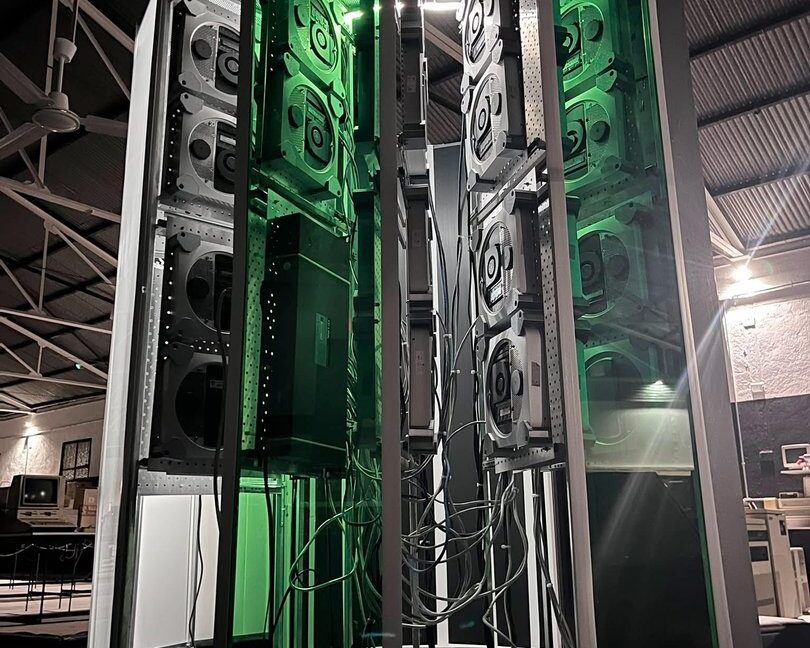
 Credit:
Patrick Wardle
Credit:
Patrick Wardle
 Credit:
Patrick Wardle
Credit:
Patrick Wardle